YVS and WFP Collaborate to Support Vulnerable Families in Gaza through the Food Assistance Project

In light of the ongoing worsening humanitarian crisis in the Gaza Strip, the Youth Vision Society (YVS), in partnership with the World Food Programme (WFP), has launched the project “In-Kind Food Assistance for Vulnerable Households in Gaza City”.
The initiative aims to alleviate food insecurity and improve the nutritional status of the most vulnerable households, particularly those affected by conflict and displacement.
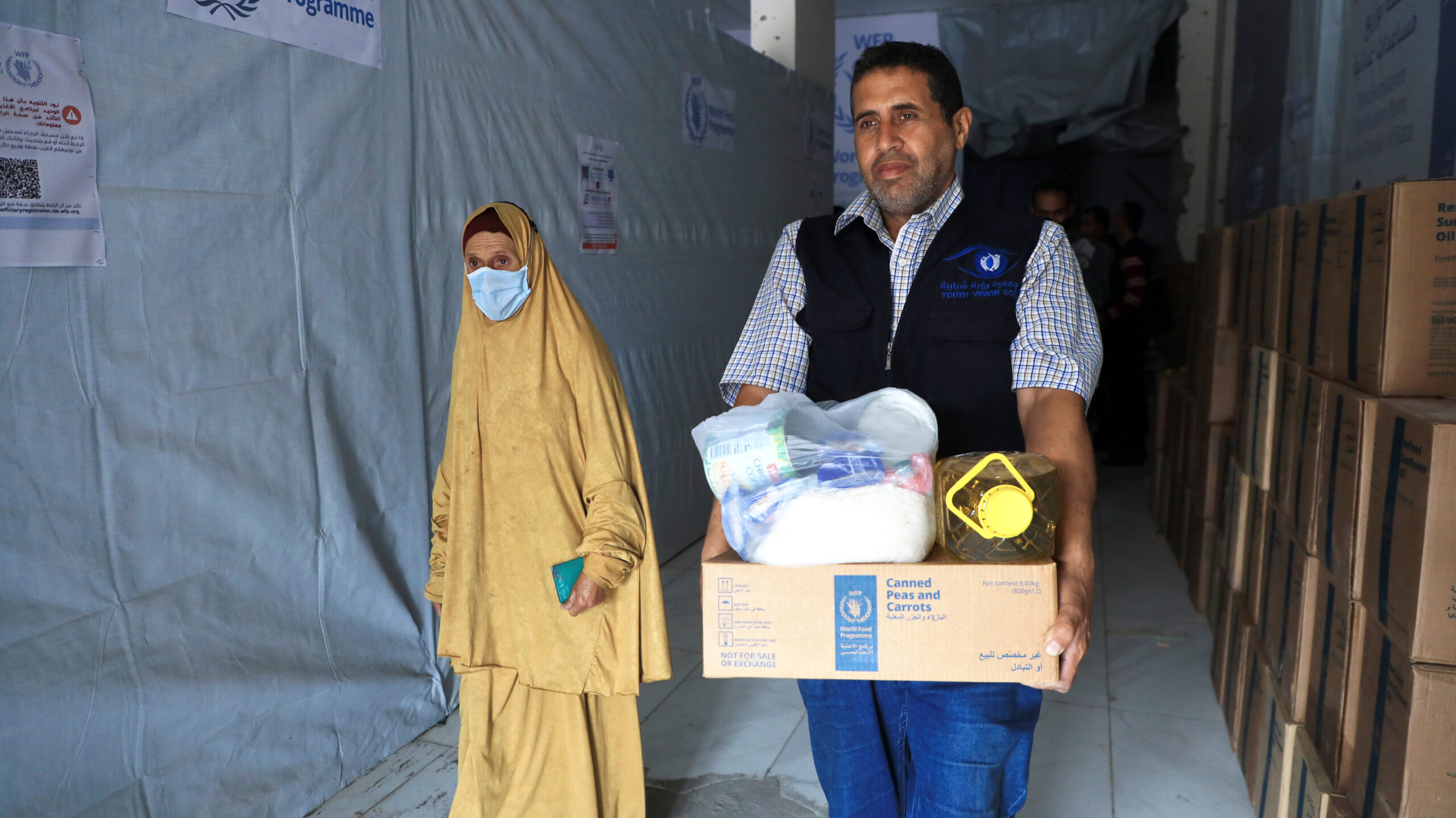
The project is implemented in the Al-Rimal neighborhood of Gaza City through the monthly distribution of 4,000 food parcels over a period of ten months, reaching a total of 40,000 parcels. It targets the most at-risk groups, including female-headed households, children, and persons with disabilities, through a comprehensive system that ensures transparency, dignity, and community participation throughout the implementation process.
Engineer Hanadi Abu Harbid, the Project Coordinator, explains that the targeted population includes households in Gaza City suffering from severe food insecurity, low or no income, and those who lost their livelihoods due to the blockade or conflict, in addition to the elderly, persons with disabilities, and families headed by women. She elaborates that the beneficiary breakdown includes 4,000 households each month, distributed as follows: 1,000 households headed by adult men, 1,000 households headed by women, 1,000 households headed by boys, 1,000 households headed by girls.
Furthermore, 70% of these families are returnees (people who have returned to their homes after displacement), while 30% are internally displaced (still unable to return to their original areas). Notably, at least 10% of the households are female-headed. A significant portion of the families are headed by children – both boys and girls, which reflects the deepening humanitarian crisis that has forced children to shoulder adult responsibilities in harsh and unsuitable conditions. The targeted groups also include persons with disabilities, though given the situation in Gaza, their actual numbers are likely far higher than reported.
Abu Harbid points out that the distribution mechanism is designed to prioritize those suffering the most under the current conditions of displacement, lack of income, and rising poverty levels. Providing a monthly food parcel per household is seen as a vital step in responding to the escalating food emergency.
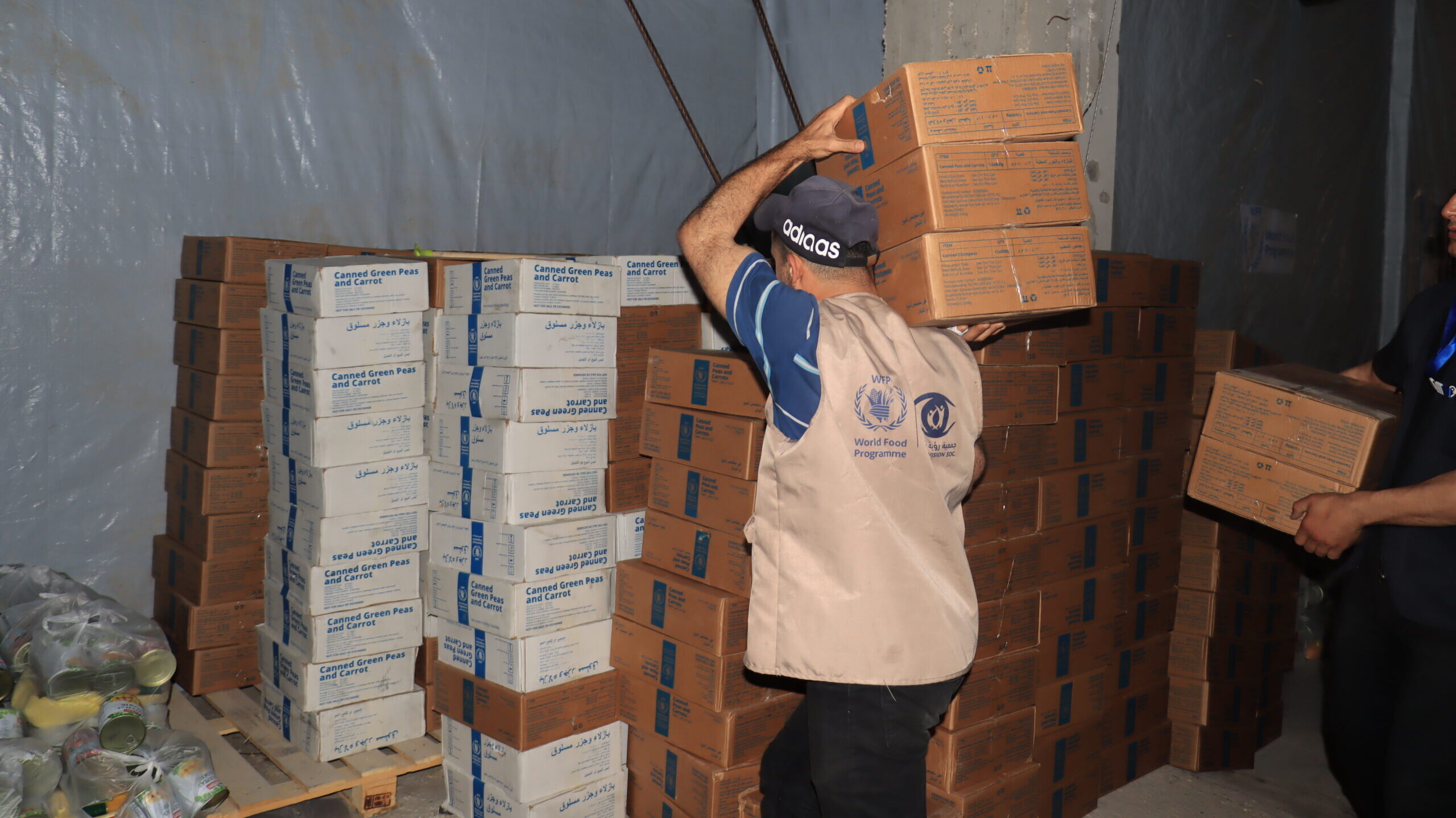
The project includes several key components to ensure effective and high-quality implementation, beginning with warehouse management, which secures the safe and organized storage and delivery of food items. This is followed by field distribution points, where aid is handed directly to beneficiaries, and a Help Desk, which addresses complaints and inquiries. A dedicated logistics and technical team oversees the distribution process and monitors quality, all in close coordination with WFP to ensure smooth and organized operations.
The beneficiary selection process relies on WFP’s database, which is based on a thorough needs assessment. Distribution takes place through a centralized point in North Al-Rimal, supervised by the YVS team according to a tightly controlled schedule. Beneficiaries receive SMS notifications with collection times to avoid overcrowding. The food parcels are handed out on-site, minimizing costs and reducing risks.
Trained YVS teams manage beneficiaries through separate queues for men and women, ensuring quick and dignified access to assistance. The first hours of each distribution day are reserved for the most vulnerable, including female-headed households (FHHs), child-headed households (CHHs), and persons with disabilities (PwDs).
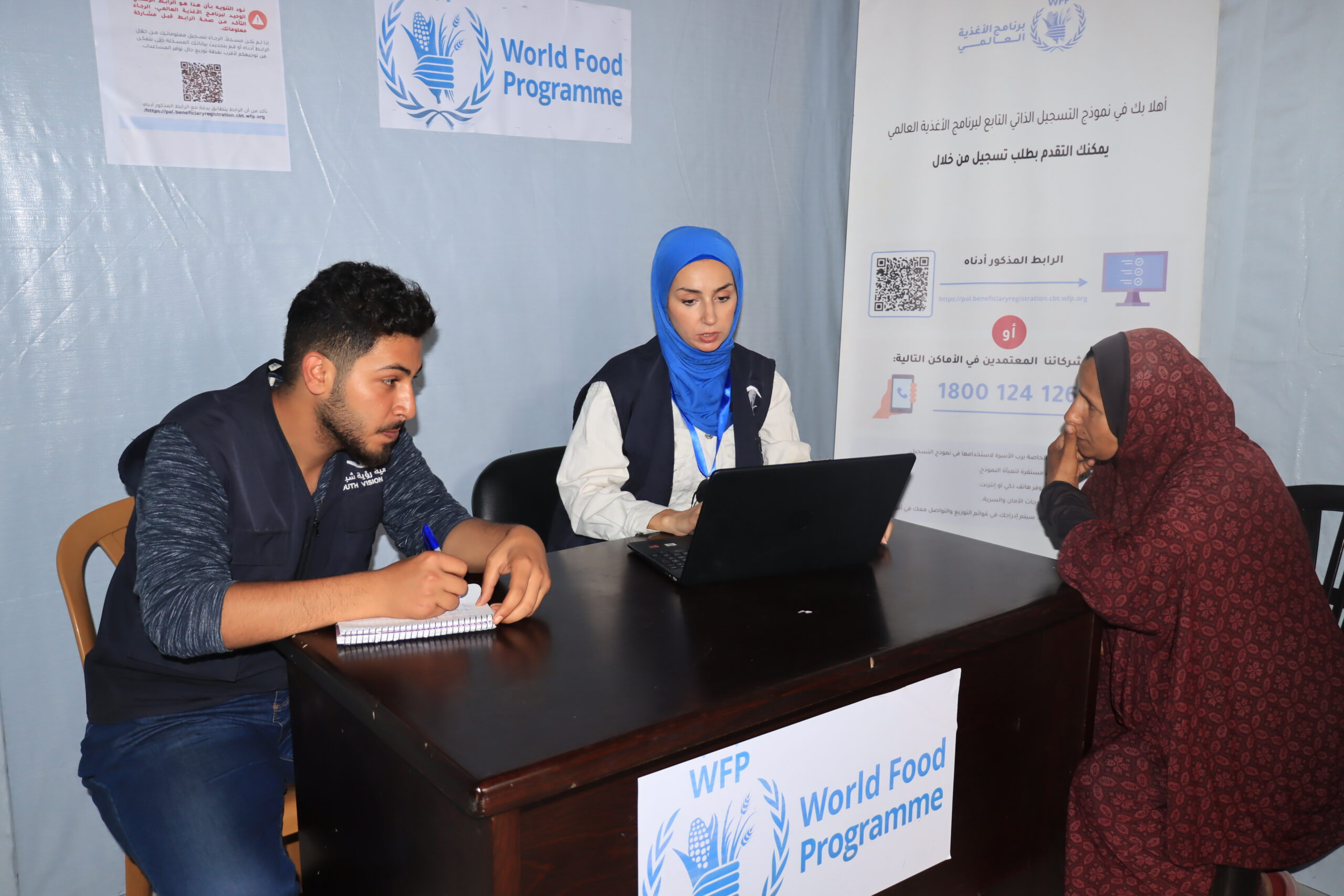
Abu Harbid also highlights the presence of a dedicated hotline for complaints and inquiries, in addition to community feedback mechanisms that promote two-way communication and enhance transparency and accountability. She notes that the current situation—especially for displaced families facing siege and food shortages—poses significant challenges for the teams, as the humanitarian need is enormous, while the closure of crossings and restrictions on truck entries have disrupted regular distribution. For the past five months, distributions have either stopped or continued in very limited capacity, with the number of trucks falling short of covering the overwhelming demand.
Regarding the Help Desk, Abu Harbid emphasizes that it is a cornerstone for ensuring fairness and transparency in service delivery. It allows beneficiaries to raise complaints or questions about distribution schedules and mechanisms, strengthening the project’s credibility and acting as an effective link between recipients and implementers. This system upholds humanitarian accountability standards in accordance with WFP and YVS protocols. The Help Desk handles between 2,000 to 3,000 cases per month, depending on pressure at the distribution point, particularly during interruptions or partial resumptions of the aid.
Through these integrated efforts, the project seeks not only to ease the food crisis facing thousands of families in Gaza but also to uphold dignity, justice, and fairness in humanitarian service provision.