
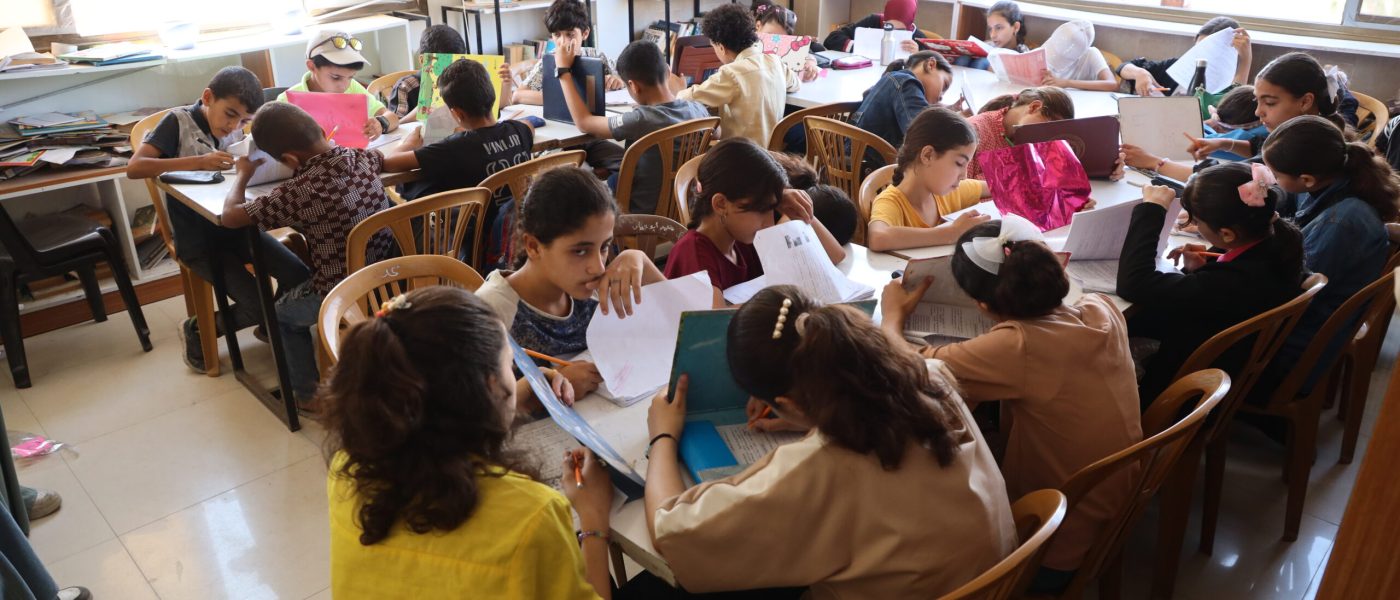
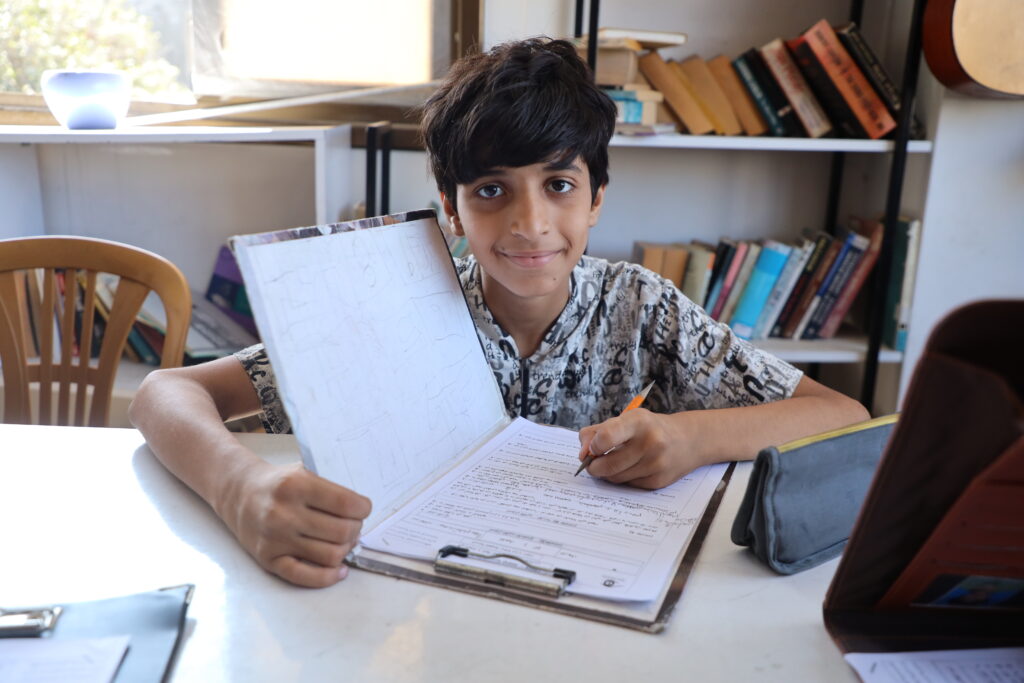
As part of the project titled “Compensated Learning and Mental Health and Psychosocial Support for Primary School Children in the Gaza Strip”, funded by the Humanitarian Fund for the Occupied Palestinian Territory, which aims to alleviate the psychological and social impacts of the ongoing genocide on children.
Engineer Rawand Daloul, the project coordinator, explained that the number of students enrolled in the two educational spaces run by the society has exceeded 450 students ranging from the second to the seventh grade.
Daloul continued, “despite the difficult field conditions in Gaza City due to the ongoing aggression, we have taken it upon ourselves to continue our educational mission, driven by our belief in the necessity of helping students recover after more than a year and a half of school disruption and extremely harsh psychological and living conditions.”
“We believe that our students have the right to access quality education, along with nonstop psychological support for them, their families, and our staff as well. Additionally, recreational and extracurricular activities help maintain their concentration in class and offer them a glimpse of normal life, even if only for a few hours each day,” she added.
English teacher Ruba Dweik expressed her happiness to contribute to supporting students and helping them return to their classrooms in cooperation with the society management and her fellow teachers.
She pointed out that one of the main challenges she faced was the prolonged interruption of students’ education due to the war, which required her to start again from scratch using modern teaching methods such as active learning and interactive activities to reintegrate students into the learning environment and maximize the benefit.
Arabic language teacher Wafaa Othman noted that one of the school year’s greatest challenges was helping students psychologically readjust to returning after the long break.
She proceeded, “We noticed a significant learning gap among most students, which required us to double our efforts to make up for what they had missed.“
Othman affirmed that there was a noticeable improvement in students’ performance, alongside growing enthusiasm and eagerness to learn.
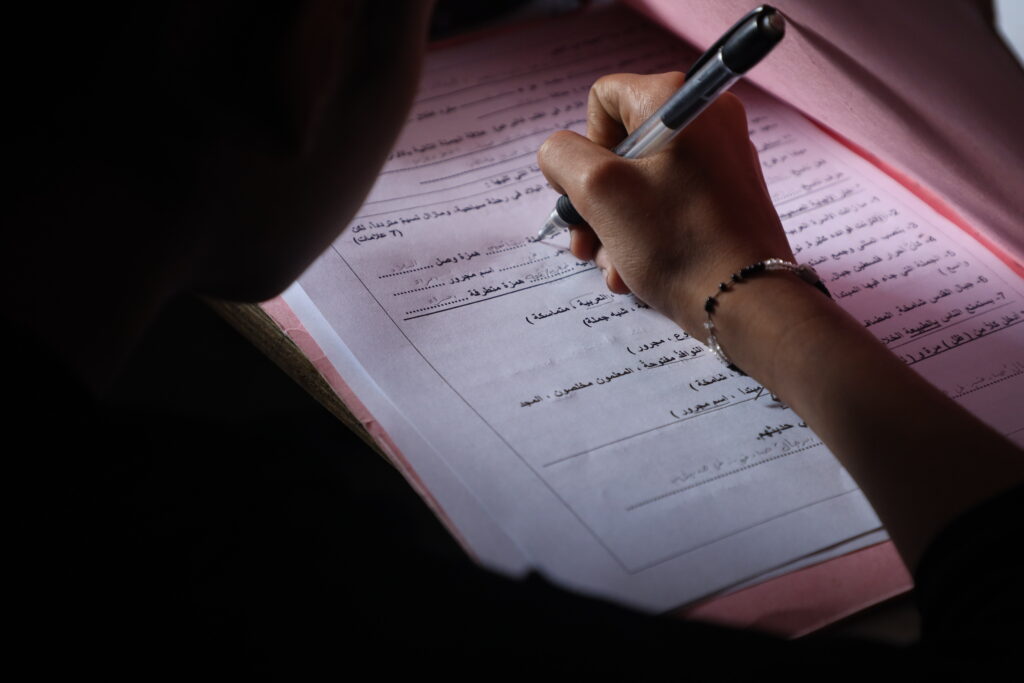
Speaking about their experience, Ayham, a sixth-grade student, said: “I was happy to return to school after a long break because of the war. When I pass by my old school, I feel sad because it has now become a shelter for displaced people. I remember how we used to study and play there. I plan to use the holiday to visit my grandfather’s house and spend time with my relatives.”
Lana, a seventh-grade student, added: “We used to spend our holidays at the beach, going on outings, and visiting relatives. I also continued learning music and playing the oud and guitar. But now, I don’t know how I will spend the vacation.”
“I used to love coming to school because the teachers didn’t just teach us lessons, they also participated in the psychosocial support and games, which made the learning environment fun and comfortable for us,” Adam, a seventh-grade student, expressed.
Despite the harsh challenges and complex field conditions imposed by the war, YVS has proven that education and psychosocial support can serve as a lifeline for children in their darkest moments. The educational space has succeeded in restoring hope to the hearts of hundreds of students, opening a window to the future through a safe, educational, and humane environment.
Amid the stories of dedicated teachers and the hopeful voices of students, the true impact of such initiatives is reflected in the rebuilding of people before places. With simple tools and big hearts, YVS continues to write new chapters of resilience and life in Gaza.