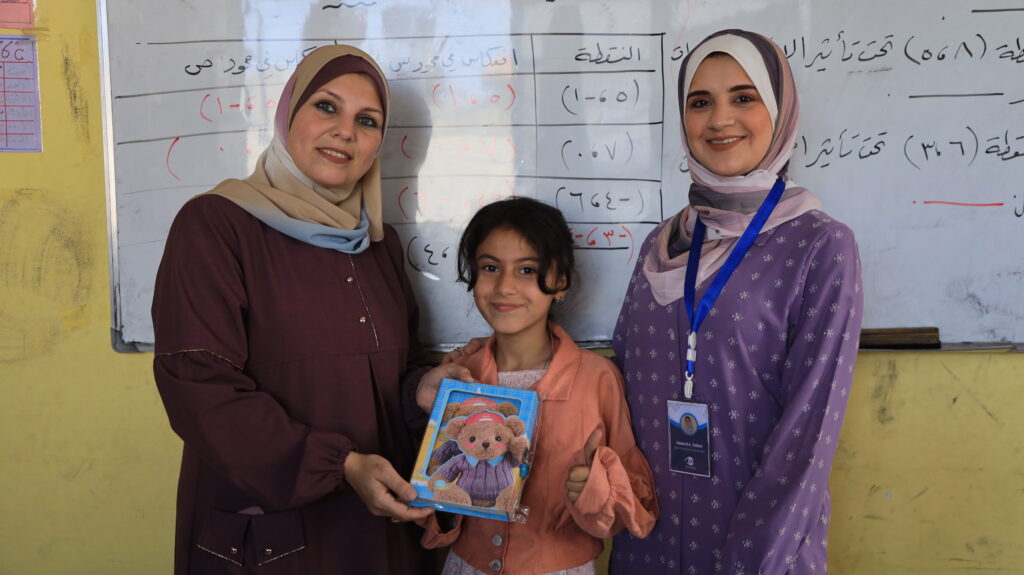
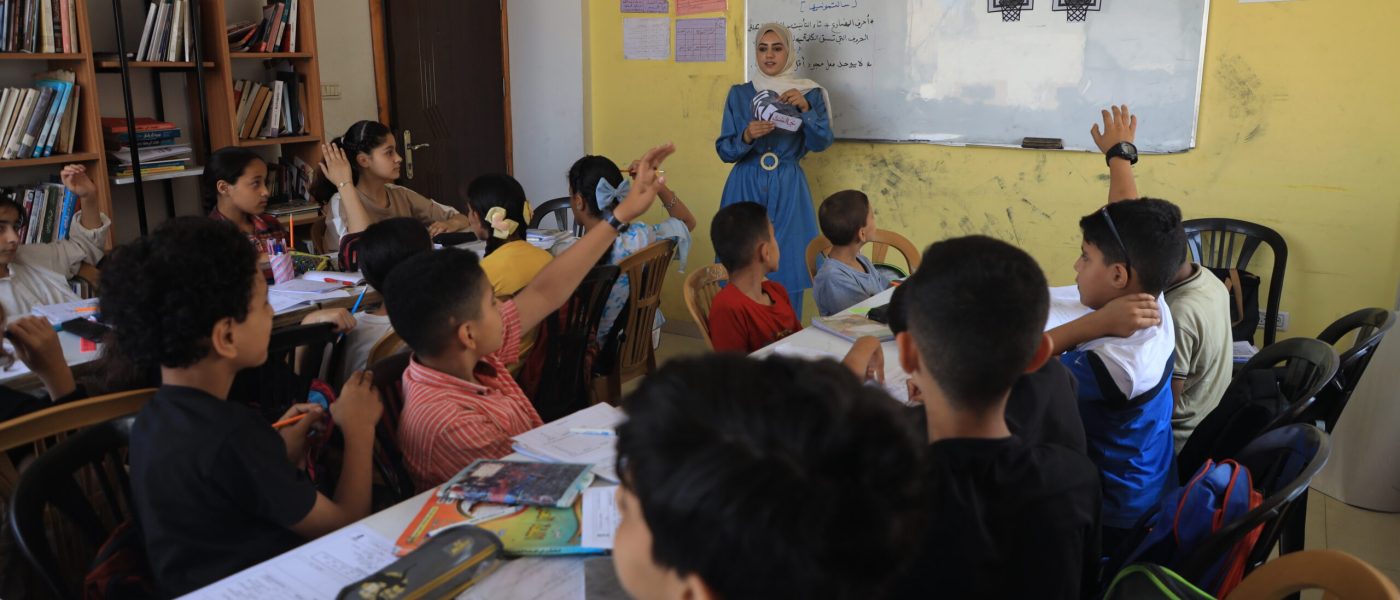
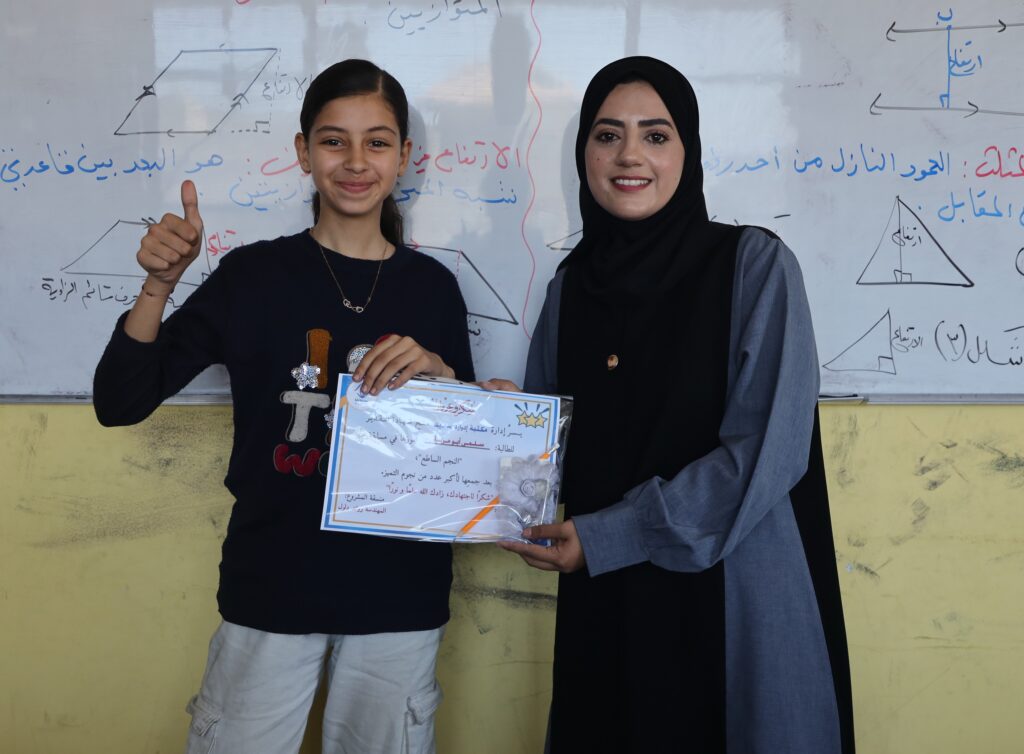
On a gray morning in besieged Gaza, teacher Wafa Othman stood in the courtyard of the Edward Said Library, looking at the faces of the children who were hesitantly approaching. They were not yet students, but children of war, carrying the ashes of displacement in their eyes and fear of books in their hearts, as if they were delayed bombs.
Wafa said with an optimistic smile, “Our project was not just a school class, it was a lifeline. We took the students from the queues at the soup kitchens, from the wood they were collecting to light fires, and returned them to their natural seats (school desks). We saved childhood from loss, and restored the value of education).
It was like restoring life to bodies that had lost all feelings at first. It wasn’t easy. The students came from the darkness of displacement, from tents that had lost even their shade, and entered the classrooms not knowing whether the pen was a new enemy or an old friend. They didn’t talk much, and they did not have enough language to express themselves. “We had difficulty helping them adapt,” said Wafa. “It was like teaching a bird to fly again after its wings had been broken.”
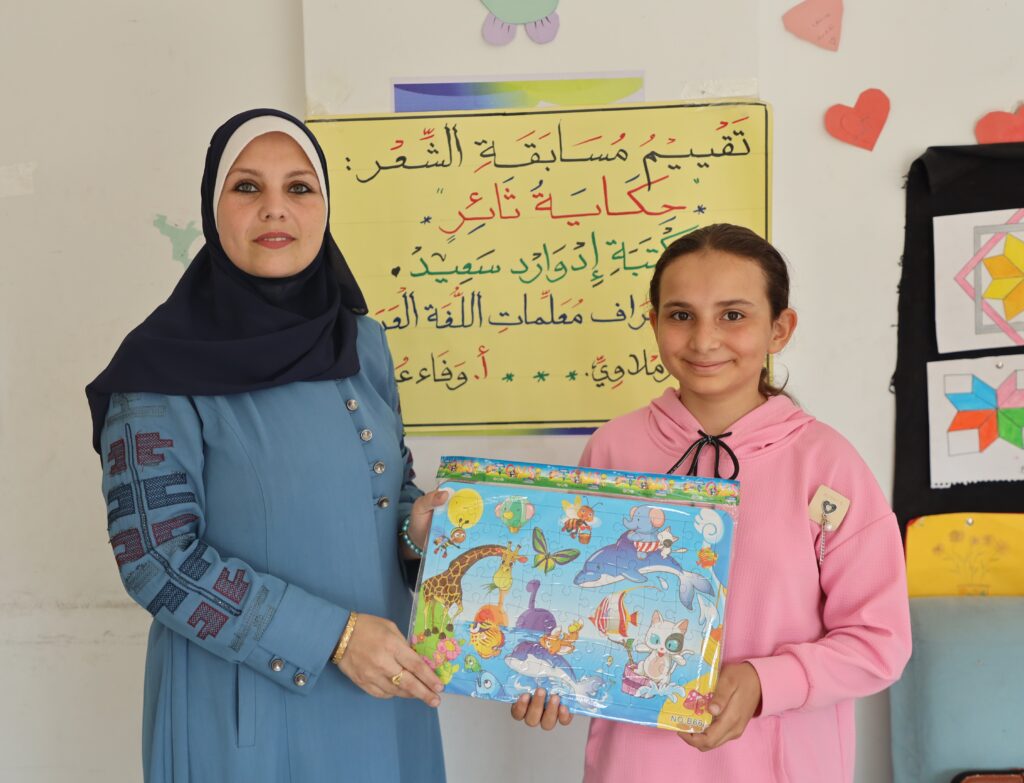
As for teacher Samar Ramlawi, she had another challenge. She was teaching seventh grade, and her task was not only to teach “hamza and qata,” but also to repair what the war had destroyed in their hearts, she said, looking at one of the students’ notebooks. “These children don’t just need books, they need a hug, a hand to hold, a school that believes they can grow from under the rubble.”
Samar, like other teachers, began with a courageous step (academic assessment), not to expose the students’ shortcomings, but to understand what had been lost. Some students did not know the order of the letters, and others could not distinguish between “dad” and “sad.” Samar continued (We had to start from scratch, as some children did not even know how to write their names.)
Despite all this, no one raised the white flag. The teachers prepared remedial educational programs, carefully divided according to ability, with lessons in spelling and reading, as if they were rebuilding their memories from scratch. But the lessons were not just from books; there were games, smart tools, and short stories based on deep educational strategies.
Wafa, for example, used the game “Lock and Key,” in which the student must find the right answer for the beginner in order to “open the door.” Playing was a means of thinking, and thinking was a window to understanding.
Samar introduced the culture of “asking permission” through the game “closed doors,” where students knock on the door three times before being allowed to answer (we don’t just teach language, we nurture a culture of patience, respect, and belonging), says Samar as she watches a child trying to open a colorful door on the wall.
In every corner, the school was breathing despite the siege. The teachers’ hearts were beating with education, not complaints, and the students soon changed. They returned to laughing, raising their hands, competing for answers, and running to their seats, not away from them. Fear turned into knowledge, ignorance turned into light, and classrooms turned from shelters into dreams.
At the end of a long day of teaching, Wafa looks at the students as they write slowly, as if the words are being resurrected from the ashes of memory.
Wafa says in a low voice, “We are like phoenixes. Whenever they throw us into the ashes of ignorance, we rise again, ablaze with knowledge.”