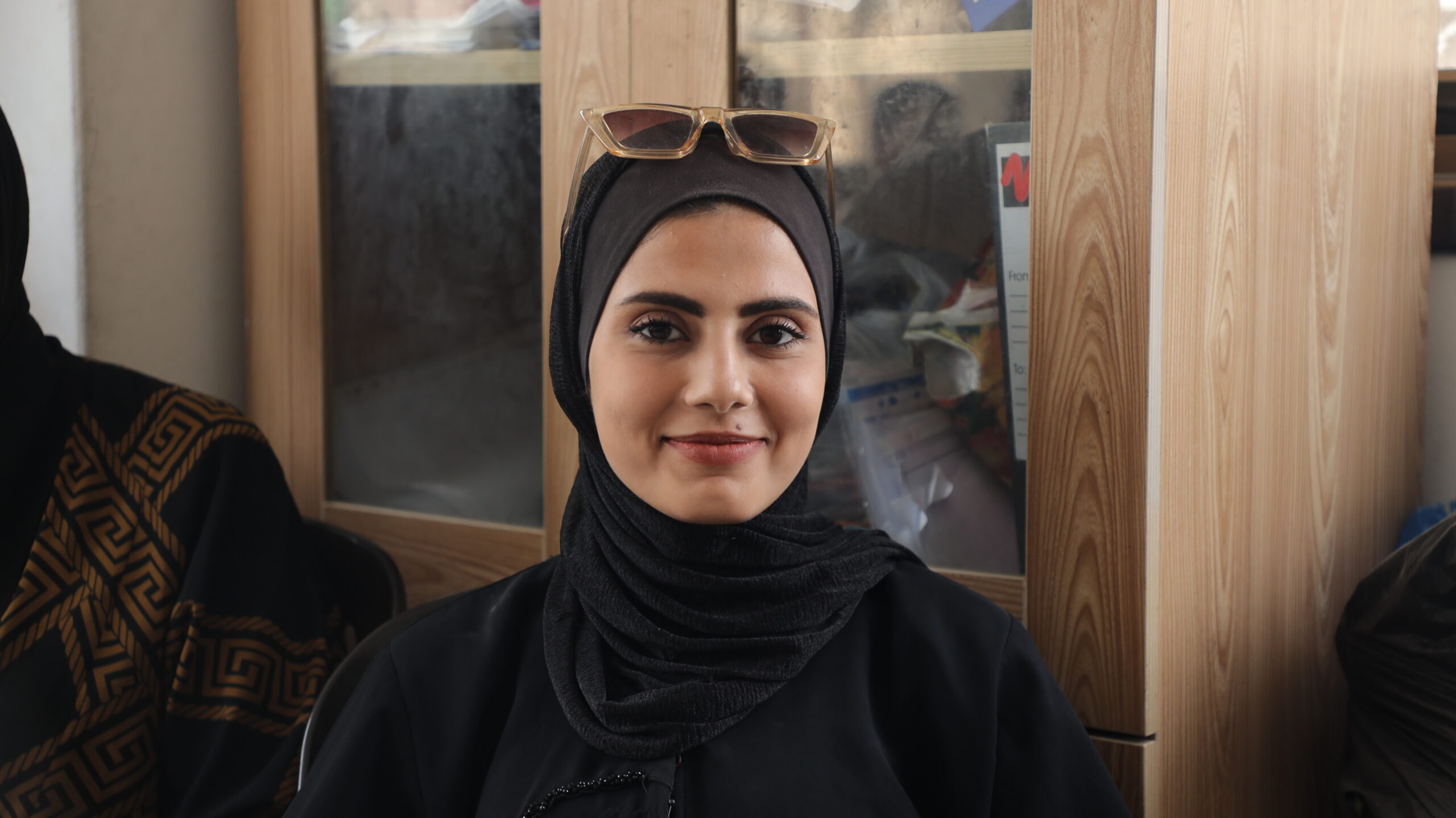
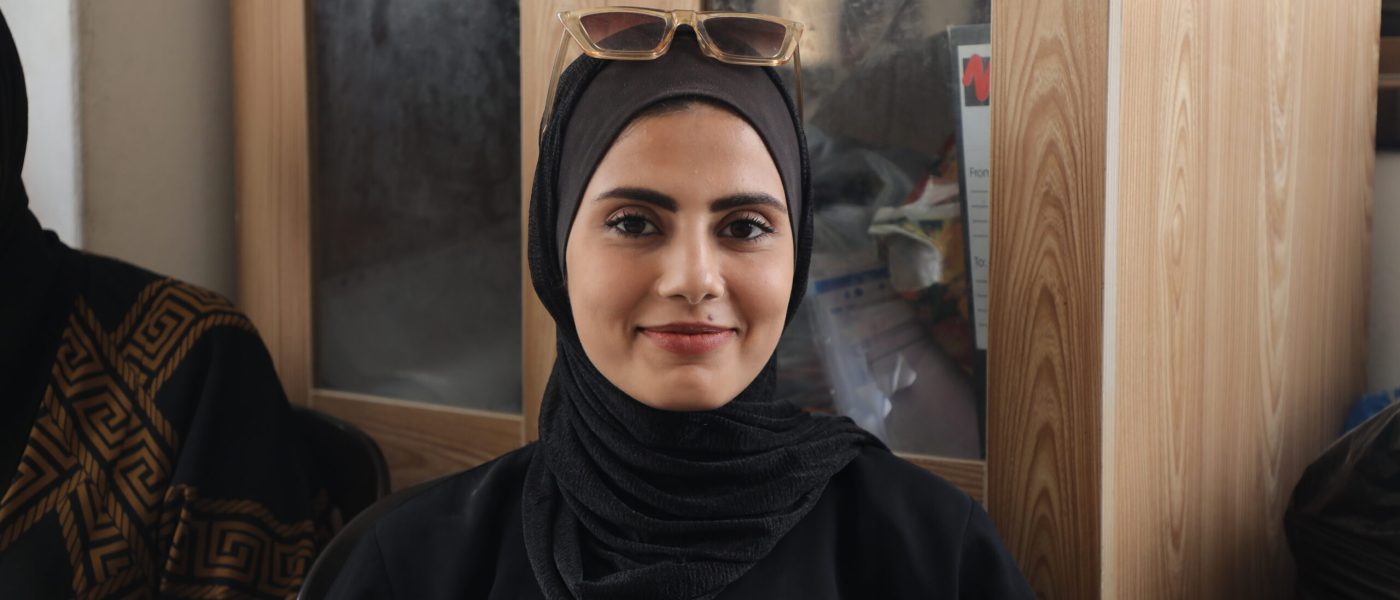
In a land that forgets how to rest, where silence is always loud and homes turn to dust before memories fully form, Rawan Mortaja was learning to survive, quietly. She was twenty-two, studying human medicine in her third year at Al-Azhar University, holding a very good average — yet her greatest tests were never written in ink. They lived in the rubble of what used to be her family’s home, destroyed completely by war. Now, she lived at her sister’s house with ten other family members — seven daughters, two sons, and stories too heavy for such a small space.
But that’s how it goes in Gaza — the walls fall and the souls stay standing.
Rawan’s life was a constant storm of pressure: academic pressure, emotional pressure, the unrelenting pressure of war and displacement. She studied bones and cells by day, but what she longed to understand most was the ache in her chest, the fatigue in her spirit. She didn’t want to stop learning, but she needed a place where she could just breathe, where she could put down her armor and say: I am tired.
When she heard about the Youth Mental and Social Support Project, implemented by Ru’ya Youth Association in partnership with Heinrich Böll Foundation – Germany, she didn’t hesitate. Not because she had the time, but because she no longer had the luxury to wait for healing.
She entered the program in the midst of war. Not to find a career — she already had one — but to find herself. To empty out the things piling up inside. “I needed a space to release what was buried within”, she said. “The colors that wanted to play, the words I hadn’t said”. Before the training, she had no outlet. No place to release her stress, her exhaustion. But during those sessions — through discussion, expression, silence, and shared humanity — she began to exhale.
“After the training, I started to feel different. I began to respond to life with more calm, more clarity. I learned how to deal with others, and how to face the pressure inside me without breaking”.
Dr. Sarah Al-Wahidi, the trainer, was not just a teacher. She was a companion. A friend. A sister in a world where companionship had grown rare. She didn’t just deliver information — she created safe spaces. In every activity, every dialogue, every shared moment, Rawan found pieces of herself returning. She left the training more balanced, more aware of her reactions, and most importantly — more kind to herself.
Rawan didn’t keep this transformation to herself.
One day, not long after the training ended, a teenage relative came to her — shy, unsure, broken by things too big for her young heart. Rawan didn’t hesitate. She gave her everything she had learned. Not just words, but experience. She spoke to her as someone who had been there. She guided her through her storm with a calm voice and steady heart. And she saw the change — in the girl’s face, in her spirit, even in her mother’s joy.
That moment was her proof: the time she had invested in healing herself was already healing others.
“I realized that what I received wasn’t just for me. It was something I now carry forward — to friends, to family, to anyone who needs it”.
And in Gaza, everyone needs it.
Even now, Rawan still lives under pressure. The house is crowded, the war isn’t over, and the textbooks never end. But she is no longer collapsing under the weight of it all. She carries tools, not burdens. She has found strategies for anger, for sorrow, for silence. She has learned that sometimes, you don’t need to fight — you need to feel, to understand, to choose a different response.
She is not trying to be perfect. She is just trying to be whole.
When she thanks Ru’ya, it is not a formality. It is a whisper of deep gratitude for a space that saw her when she couldn’t see herself. For a journey that reminded her that she is not just surviving — she is growing.
Rawan’s story isn’t a fairytale. It doesn’t end with magic. But it does end with strength. With resilience. With the quiet power of a woman who learned how to rise — not above the war, but above what the war tried to do to her.