I’m still here: Farah’s story between war and life
I’m still here: Farah’s story between war and life
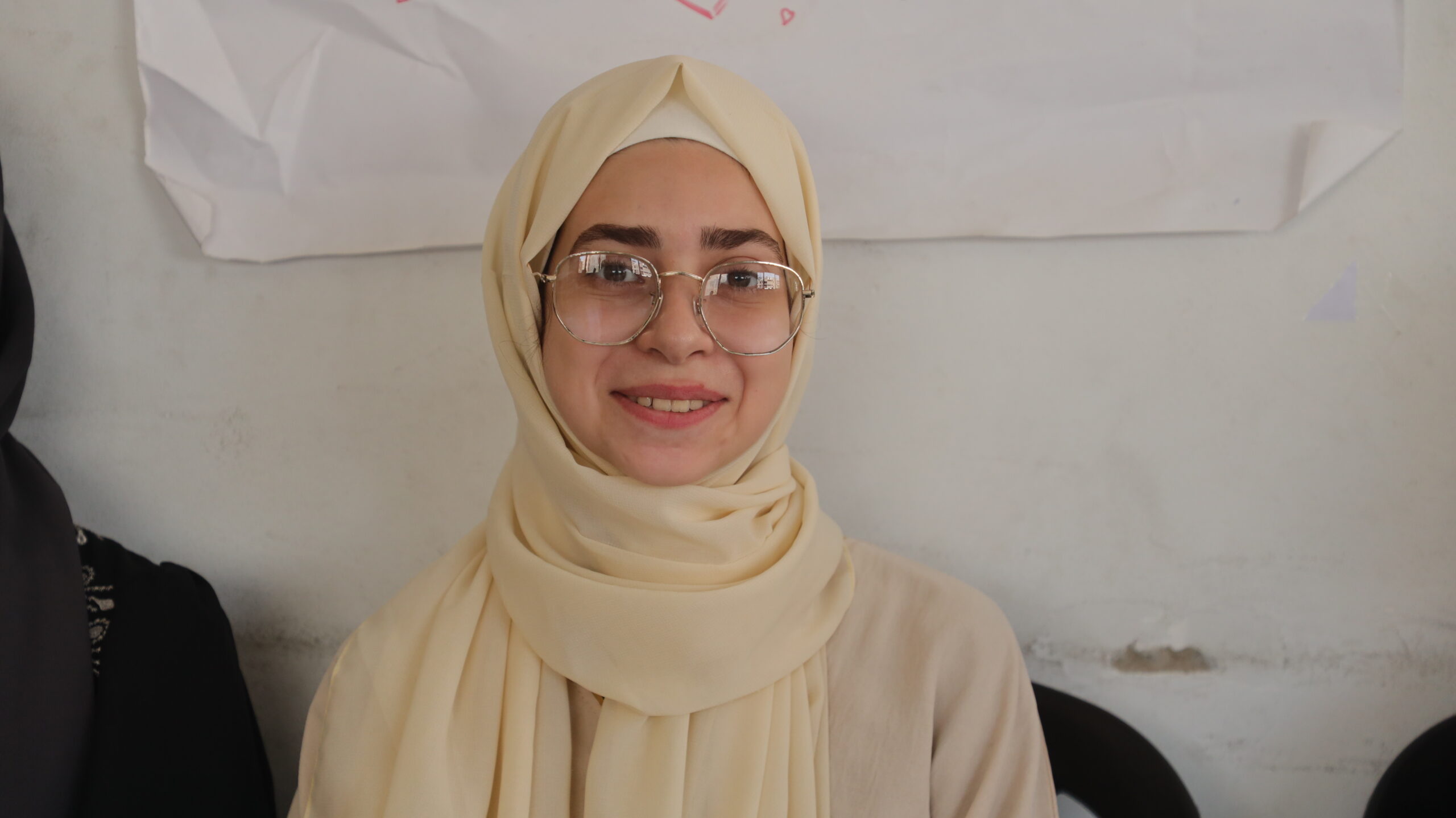
In one of the painful chapters of Gaza’s history, Farah Samer Zeina, an ambitious young woman born in 2000, was confidently striding toward her future as a graduate in English literature and a former lecturer at the Faculty of Applied Sciences, she had distinguished academic and training experience, in addition to her work in translation and education. She was on a promising career path, but the recent war did not just knock on her door; it uprooted her and brought unexpected chaos into her life.
(The war wiped out everything) This is how Farah describes her situation. She lost her home and her colleagues and friends, and the carefully planned steps she had been taking were scattered. Even her relationship with her students was severed; some of them were killed, and others became distant. Then came the moment when tanks invaded her area, as she had never left the northern Gaza Strip, and her psychological collapse began. For the first time in her life, she felt real hunger, insecurity, and a loss of ability to give.
But amid this rubble, Farah was not alone. Dr. Rifaat Al-Arour, whom she described as her (second father) was present at every stage of her life, from her first day at university to the most difficult moments during the ongoing war. He was her refuge when she stumbled and her advisor when she faced students or struggled with her career choices. He supported her with scholarships and opportunities for development, and even when she decided to refuse to travel to Ireland, he was there to redraw a new roadmap with her.
Then came the opportunity of the Youth Vision project, which Farah described as (the big turning point.) She began training with psychological release sessions. (I needed to release everything. I had lost the ability to give. I even forgot that I was good at English) she says.
As the days passed and the support sessions continued, she began to smile and laugh and rediscover what she had lost through lighthearted and cheerful situations, allowing her to begin healing from within. Farah learned strategies for dealing with her feelings, how to manage her anger, and how to face moments of acute isolation. Farah says “I started sitting with my family after I had distanced myself from them, and now I try to be more balanced and confident”.
She continues, (I started reminding myself that I am capable, and I started writing again and applying for jobs. When I laughed during training, I tried to gradually carry that energy home with me, and I began to regain my passion for life).
Farah is now not only a survivor of war but also a voice of light in the darkness, a young woman who carries a story of pain in her heart but is writing a new chapter of hope. She thanked Ru’ya and everyone who was instrumental in her return to life to tell the world, (I am still here, and I am still capable of dreaming.